

Search
Learning Center
- Cosmetic
- Diabetic Issue
- Fitness and Your Feet
- Foot Care
- General
- Medical Care
- Diagnostic Procedures
- Diseases of the Foot
- Surgical Procedures
- Therapies
- Vascular/Nerve Problems
- Orthotics
- Nail Issue
- Pain
- Achilles Pain
- Ankle Pain
- Arch and Ball Pain
- Deformities
- Tarsal Coalition
- Spurs
- Posterior Tibial Tendon Dysfunction
- Overlapping, Underlapping Toes
- Osteomyelitis (Bone Infections)
- Mallet Toes
- Gordon Syndrome
- Enchondroma
- Dysplasia
- Clubfoot
- Amniotic Band Syndrome
- Hallux Varus
- Hallux Rigidis (rigid big toe)
- Hallux Limitus (stiff big toe joint)
- Claw Toe
- Haglund's Deformity
- Sesamoiditis
- Metatarsalgia (foot pain in ball)
- Flat Feet (over pronation)
- Peroneal Tendon Dislocation/Dysfunction
- Hammertoes
- Bunions
- Heel Pain
- Toe Pain
- Shoes
- Skin Issue
- Sports Injury
Hammertoes
Photos
Make an Appointment?
Interested in a professional’s opinion? Schedule an appointment today!
Schedule an AppointmentHammertoes
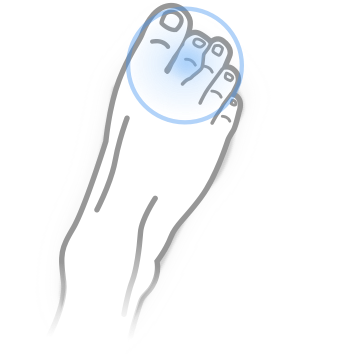
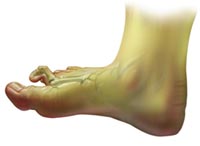
Hammertoe is a deformity of the second, third, or fourth toes. In this condition, the toe is bent at the middle joint, causing it to resemble a hammer. Left untreated, hammertoes can become inflexible and require surgery. People with hammertoe may have corns or calluses on the top of the middle joint of the toe or on the tip of the toe. They may also feel pain in their toes or feet and have difficulty finding comfortable shoes.
Causes of hammertoe include improperly fitted shoes and muscle imbalance.
Treatment for the condition typically involves wearing shoes with soft, roomy toe boxes and toe exercises to stretch and strengthen the muscles. Commercially available straps, cushions, or nonmedicated corn pads may also relieve symptoms.
In severe cases, hammertoe surgery may be recommended to correct the deformity.